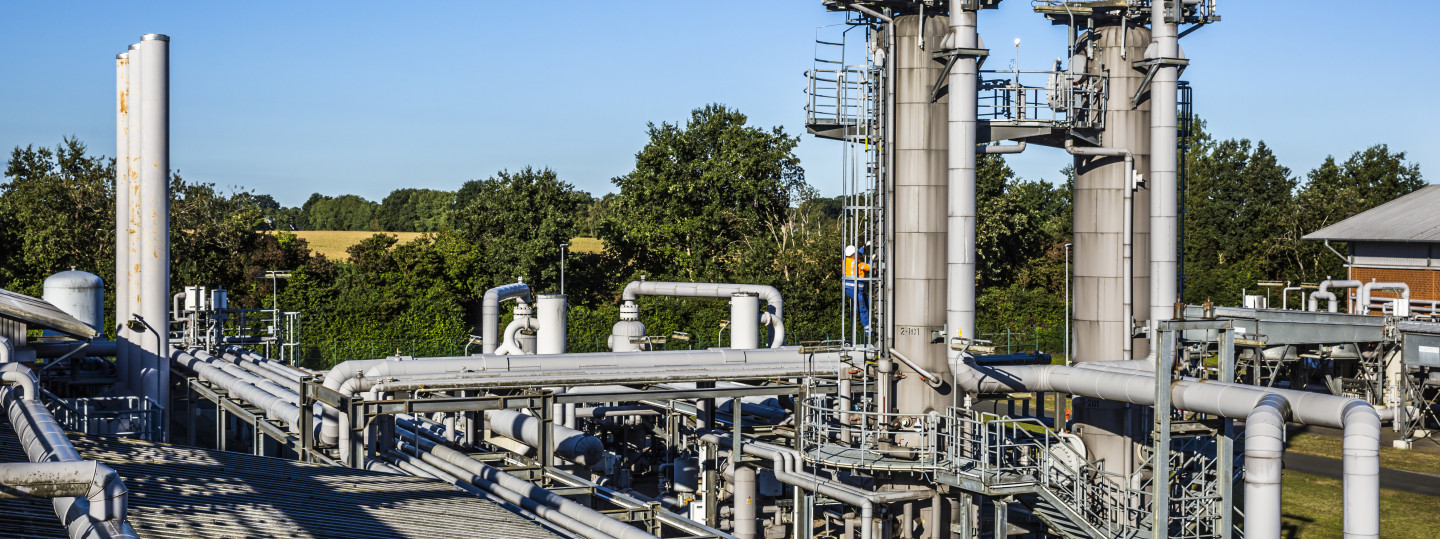
Storengy Deutschland receives millions in EU funding for SaltHy hydrogen storage project
- Storengy Deutschland signs grant agreement with the European Commission, securing up to 4.5 million euros in funding from the EU Connecting Europe Facility (CEF) fund for the SaltHy hydrogen storage project.
- The company is planning to build an underground hydrogen storage facility near its existing natural gas storage facility in Harsefeld, Stade region (Lower Saxony). The hydrogen storage facility is scheduled to go into operation in 2032.
- The project is of particular importance for the EU's energy infrastructure: thanks to its location at the crossroads of import routes from Denmark and the Netherlands, the hydrogen storage facility in Harsefeld will have a cross-border impact and contribute to an integrated European hydrogen market.
Berlin/Harsefeld, 19 June 2025. Green light from Brussels: Storengy Deutschland receives EU funding of up to 4.5 million euros from the European Connecting Europe Facility (CEF) fund to carry out studies. The grant agreement was signed on 18 June 2025 and will be used to drive forward the further development of the SaltHy hydrogen storage project in Harsefeld in the Stade region of Lower Saxony.
EU funding for the SaltHy hydrogen storage project
CEF is a funding instrument that aims to promote growth, jobs and competitiveness in Europe through targeted investment in cross-border infrastructure. It supports the development of projects in the areas of transport, energy and digital services. The funding is aimed at so-called Projects of Common Interest (PCI), a status that SaltHy has also received. These projects are of particular importance for the EU's energy infrastructure. In the call for funding for PCI projects in the energy sector in 2024, Storengy applied for funding for studies, i.e. preparatory measures for project implementation.
The funding will be used for predefined work packages in the areas of engineering (underground, above ground and brine plant), approval procedures and stakeholder management as well as risk, HSE and quality management. The project volume for the studies in these areas amounts to a total of around nine million euros, 50 percent of which can now be covered by the funding.
‘Thanks to the funding from the Connecting Europe Facility, we can take the next step in the implementation of our SaltHy project. Our hydrogen storage facility in Harsefeld will have an impact beyond Germany's borders thanks to its location at the crossroads of import routes from Denmark and the Netherlands. This is why the EU is funding the study phase of our project. Such funding is essential for the ramp-up of a European hydrogen economy,’ says Matthieu Keime, Head of Hydrogen Storage at Storengy Deutschland.
SaltHy project: construction of an underground hydrogen storage facility
Hydrogen will play a crucial role in the energy mix of the future, particularly in the decarbonization of industry and the achievement of European and German climate targets. Hydrogen storage is essential for a successful H2 market ramp-up. Without storage solutions, it will not be possible to balance the volatile production of green hydrogen in particular with consumption and secure the energy supply.
Storengy Deutschland is planning to build an underground hydrogen storage facility in salt caverns near its existing natural gas storage facility in Harsefeld in the Stade region of Lower Saxony. Two caverns with a working gas volume of around 7,000 tons each are to be built with the aim of storing 100 percent hydrogen. Commissioning of the hydrogen storage facility with the first cavern is planned for 2032, with the second cavern expected to be commissioned in 2034. The existing natural gas storage facility will then be converted to H2 storage.
Strategic importance of SaltHy in the hydrogen economy
SaltHy is ideally located to play a central role in the European and German hydrogen economy. Northern Germany, in particular Lower Saxony, is at the center of the future hydrogen core network, its first sections in the Stade region are scheduled to go into operation as early as 2028. The geographical location with its adjacent port, H2 delivery by ship and ammonia rectification makes this region an important strategic hub for trade, logistics and industrial development relating to H2.
About Storengy Deutschland
Storengy Deutschland, a company of ENGIE Group, is one of the leading gas storage companies in Germany. With around 150 employees across Germany, we are a reliable partner for storage services: we plan, build and operate storage facilities and market their storage capacities. Our mission is to store climate-neutral energy in order to sustainably supply tomorrow's generations. Therefore, we are developing innovative solutions for storing hydrogen and renewable gases. The company's headquarters are in Berlin.
Your contact person

Leiterin Kommunikation
Co-funded by the European Union. However, the views and opinions expressed are those of the authors only and do not necessarily reflect those of the European Union or the European Climate, Infrastructure and Environment Executive Agency (CINEA). Neither the European Union nor the funding agency can be held responsible for them.